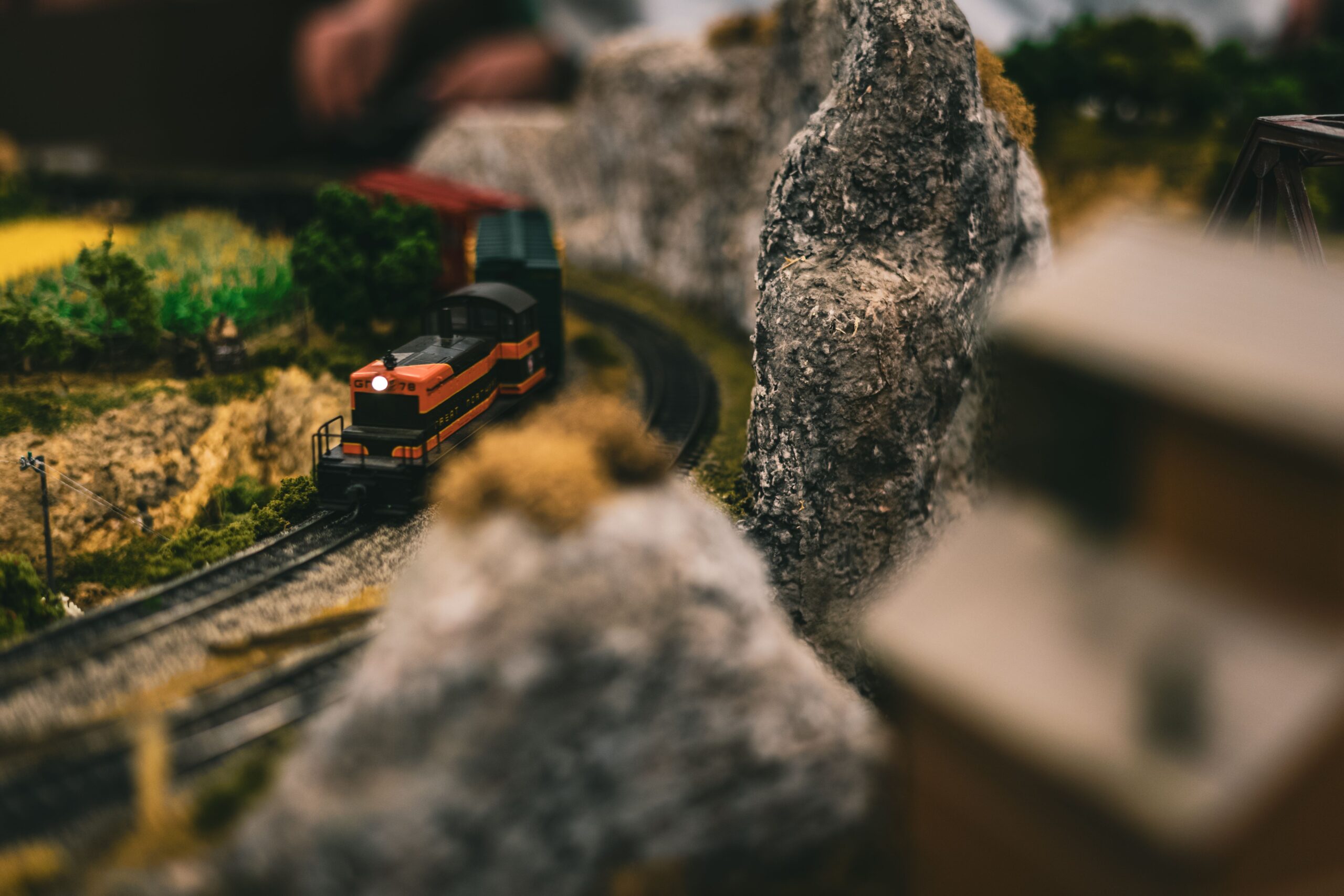
There is a wagon in my collection that has irritated me for years.
It is an ordinary OO gauge goods wagon. Nothing rare, nothing valuable and certainly nothing Sue would recognise if I replaced it with another one tomorrow. The body is well proportioned, the lettering is tidy and it runs without complaint. From normal viewing distance it looks perfectly respectable.
The brake gear is wrong.
I noticed it when I first took the wagon out of its box. The brake shoes sat awkwardly against the wheels and part of the linkage looked as though somebody had followed a photograph without understanding what the rods were meant to do. Once seen, it could not be unseen.
This is one of the less convenient consequences of having worked around railways. You can enjoy a model until some small mechanical detail catches your eye. After that, the locomotive may run beautifully and the scenery may be excellent, but you are still looking underneath a wagon and muttering about brake rigging.
Sue found me doing exactly that at the kitchen table.
“Is it broken?”
“No.”
“Does it run?”
“Yes.”
“Then what is wrong with it?”
I turned it over and pointed at the underframe. This did not improve matters. To Sue it remained a small brown wagon with all its wheels attached. My explanation of brake shoes and operating rods lasted less than a minute before she went to make tea.
The mistake was not dramatic. The model would still travel around the layout and nobody watching from across the room would notice anything. That was almost what made it worse. The manufacturer had taken care over the lettering and plank detail, then treated the equipment underneath as decoration.
On the real railway, the brake gear had a job. It transferred movement through rods and levers so the brake blocks acted where they were supposed to. Different wagon types used different arrangements and those arrangements changed over time. You did not simply scatter a few black mouldings beneath the chassis and hope nobody looked too closely.
People do look closely. Model railway people are particularly good at it.
I took a photograph and sent it to Geoff. This was unwise because Geoff regards a minor modelling discrepancy as the beginning of an investigation. His reply arrived later that afternoon.
“Wrong.”
That was the entire message.
A second message followed with a marked-up photograph and considerably more enthusiasm. He had spotted the same problem immediately, although we disagreed about the easiest correction. Geoff wanted to remove most of the moulded gear and rebuild it. I wanted the wagon back on the track before either of us turned a small annoyance into a winter project.
This was familiar territory. The last time I worked on the Class 47 model, a simple running fault led to an extended discussion about pickups, wheel cleaning and whether Geoff’s preferred solution involved more solder than any reasonable person should use near plastic.
With the wagon, I settled for a modest correction. I adjusted the most obvious offending parts, darkened the underframe and stopped before the job began demanding specialist components. The result is not exhibition standard. It is simply less wrong than it was.
That distinction matters more than modellers sometimes admit.
There is a point where accuracy improves a model and another where the search for accuracy prevents you from enjoying it. I have seen layouts with beautifully researched rolling stock that rarely completes a circuit because the owner is still correcting something. I have also seen cheerful train sets containing impossible combinations of locomotives and wagons that have given their owners years of pleasure.
My own collection sits somewhere between the two. As I wrote in Bill’s Toy Train Collection, it was never assembled as a museum catalogue. Some pieces matter because of the prototype and others because I remember where they came from. A few are there because I liked them and bought them before checking whether they belonged together.
The troublesome wagon has now returned to service. It runs behind the Class 47 and behaves exactly as it did before I interfered with it.
The brake gear is still not entirely right.
It is right enough that I no longer turn the wagon over every time it comes out of the box. Geoff would rebuild it. I have put it back on the layout and moved on to the next small mechanical offence waiting to be discovered.
No responses yet