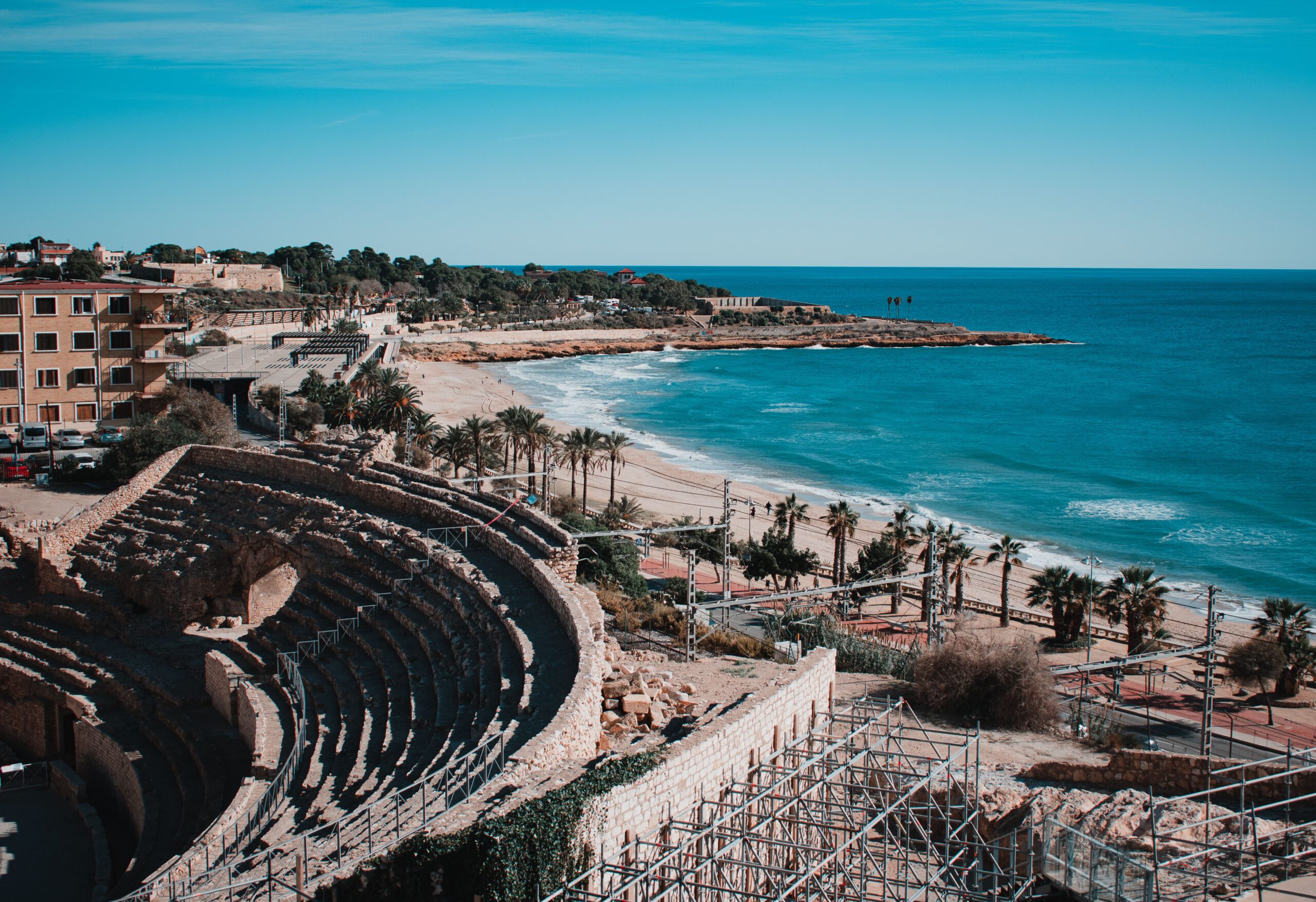
Sue announced on Tuesday morning that we were going somewhere at the weekend.
“Somewhere nice,” she said.
“Where?”
“Haven’t decided.”
“By train?”
She put her coffee down.
“Bill, I want one day out where you don’t spend half the time looking at signals, checking platform numbers or explaining why the railway was better in 1978.”
I thought that was a little unfair. Some things were better in 1978. The biscuits, for a start.
“All right,” I said. “No railway talk.”
She looked at me for a moment.
“You said that in Zaragoza.”
“That was different.”
“You spent twenty minutes explaining the bogies.”
“They were interesting bogies.”
And so it was agreed. A day out in Catalonia, somewhere pleasant, lunch in a proper restaurant and absolutely no railway discussion.
Naturally, we went by train.
A Perfectly Ordinary Saturday
We left Barcelona after breakfast, Sue carrying a small bag containing everything a sensible person might need for a day out. Water, tissues, sunglasses, a cardigan and something for a headache.
I had my phone, wallet and a folded railway timetable.
The timetable was confiscated before we reached the station.
“Honestly, Bill.”
“It’s just paper.”
“It’s never just paper.”
She had a point.
I’d already written about the things I notice in stations that most people walk straight past. Sue has read that particular article and considers it evidence for the prosecution.
We were heading towards Tarragona, with no particular agenda beyond finding somewhere to walk, somewhere to eat and perhaps a bit of sea air.
A perfectly respectable retirement activity.
At Barcelona Sants I managed not to comment on the departure boards. I didn’t mention the platform arrangements either, although there was something about them that deserved mentioning.
Sue noticed me looking.
“Don’t.”
“I haven’t said anything.”
“Your face has.”
The Chap From Jávea
We found our seats opposite a British couple who looked about our age.
The chap had a tan, a paperback and the relaxed expression of someone who hadn’t experienced a British November for several years.
His wife was reading something on her phone.
We exchanged the usual polite nods. Then he heard Sue telling me to stop looking at the track.
“Railway man?” he asked.
“Retired. Crewe. Forty-odd years.”
His face brightened.
“Ah, Crewe. Proper railway town.”
Well, that was it. The door was open.
Sue gave me a warning look.
“Not today,” she said.
The chap laughed.
“Sorry. Didn’t mean to start anything.”
He introduced himself and explained that they lived down in Jávea on the Costa Blanca. Lovely place, apparently. Sea, mountains, good restaurants and rather more sunshine than Cheshire.
He’d been in Spain for years and ran a web design business.
“Web design?” I said.
“That’s right. Javea Web Design. Websites for businesses, that sort of thing.”
“Ever built one about trains?”
Sue shut her eyes.
“Bill.”
“What? It’s a reasonable question.”
He laughed again.
“Not yet. Why, have you got one?”
“As a matter of fact…”
I explained about Train Artisan, how I’d started writing about railways after we moved to Spain, and how Sue had gradually become an unwilling supporting character.
“Unwilling?” she said. “I’m the only reason anyone gets fed.”
The chap asked whether I enjoyed writing it.
“Very much. Although I spend longer fiddling with the photographs than writing the articles.”
“That’s usually how it goes.”
I told him about Geoff, an old railway mate now living outside Lleida, who can identify a freight locomotive from half a mile away but struggles to operate his mobile telephone.
The chap smiled.
“Sounds like someone I know.”
“Geoff’s a good man,” I said. “You just wouldn’t ask him to set up your website.”
Sue was now talking to his wife about restaurants and places to visit. Within five minutes they’d exchanged more useful information than I’d managed in the previous quarter of an hour.
I was still trying to explain why a Class 47 was such a fine locomotive.
The Trouble With Being Retired
There’s a peculiar thing about retirement.
You spend your working life looking forward to the day when you can stop talking about work. Then you retire and discover that half the interesting people you meet want to know what you used to do.
I don’t mind that.
The railway was my life for a very long time. It wasn’t always pleasant. There were cold mornings, awkward shifts, broken equipment and managers who’d never held a spanner telling you how long a repair ought to take.
But there were good people too.
And once you’ve worked on the railway, it stays with you.
I’ve mentioned this before in my rather unfair comparison of British, Spanish and European railways. You can leave the job. You can’t quite leave the habits.
The chap from Jávea understood that.
He said he’d once spent a holiday trying to explain to his wife why he was interested in the websites of restaurants they were visiting.
“Even when you’re not working?” I asked.
“Especially then.”
I nodded.
Sue and his wife exchanged a look.
Apparently, we’d found each other.
Tarragona, Eventually
We said goodbye at Tarragona and wished them a pleasant journey.
“Nice couple,” Sue said as we left the station.
“Very nice.”
“And you only talked about trains for twenty minutes.”
“Twenty-five at most.”
“Thirty-eight. I checked.”
She hadn’t, of course. At least I don’t think she had.
Tarragona was looking rather splendid. The sun was out, there was a breeze coming off the Mediterranean and we walked through the older streets without any particular destination in mind.
This is something Sue enjoys enormously.
I prefer knowing where I’m going.
Not because I’m controlling. It’s simply that after forty years working with timetables and operating procedures, wandering about without a plan feels faintly irresponsible.
We found a café and sat outside.
Sue ordered coffee. I had the same.
A little dog appeared from under the next table and took an immediate interest in my shoes.
“He’s probably after your biscuits,” Sue said.
“I haven’t got any biscuits.”
“That’s the first sensible thing you’ve said all morning.”
We sat there for a while watching people go past. A delivery van tried to negotiate a corner that was clearly designed several centuries before delivery vans existed. Two cyclists argued cheerfully about directions. Somewhere nearby, somebody was playing a guitar rather badly.
It was lovely.
And not a railway in sight.
A Small Victory for Sue
After coffee we walked towards the sea, stopping whenever Sue spotted something interesting.
A little shop selling ceramics. An old doorway. A courtyard with a lemon tree.
I found myself examining the ironwork on a balcony.
“Don’t tell me,” she said. “Railway engineering.”
“No. Just nice ironwork.”
“Good.”
“Although the riveting is quite similar to…”
“Bill.”
I stopped.
We found somewhere for lunch, a modest restaurant with tables outside and a waiter who seemed completely untroubled by the fact that we took ten minutes to decide what we wanted.
Sue had fish. I ordered something involving pork and potatoes.
Both were excellent.
There was wine, too, which may explain why I agreed that we should come back and spend a weekend rather than just a day.
“No trains?” she asked.
“Well, we’d have to get here somehow.”
“Once we’re here.”
“Not a word.”
She smiled.
I’ve been married long enough to recognise that smile. It means she’s won, and that any further discussion will merely make the defeat more expensive.
The Journey Home
On the way back we were quieter.
Sue read her book. I watched the countryside pass the window.
Old buildings, little industrial estates, stretches of farmland and the occasional glimpse of the sea.
I noticed a disused siding.
Said nothing.
Then an old railway building, the sort that might once have housed equipment or a small maintenance gang.
Still said nothing.
A few minutes later we passed a junction and I instinctively looked to see which way the points were set.
Sue lowered her book.
“You’ve been very good today.”
“Thank you.”
“Only one question.”
“Go on.”
“That chap we met. Do you think he’ll look at your website?”
“Possibly.”
“Will you ask him?”
“No need. He seemed perfectly happy.”
She returned to her book.
Then, after a moment:
“Perhaps he could make it easier for people to find your articles.”
I looked at her.
“Sue, are you suggesting improvements to my railway website?”
“I’m suggesting that if you’re going to spend half your retirement writing the thing, somebody ought to be able to find it.”
There wasn’t much I could say to that.
I looked out of the window again.
We were approaching Barcelona, and I could see the familiar spread of tracks ahead.
For once I didn’t feel the need to explain any of them.
It had been a good day.
Good food, good company, a pleasant walk and an unexpected conversation with someone who understood what it was like to have a job follow you into retirement.
Sue had enjoyed herself, which was the main thing.
As we stood up to leave the train, she handed me the folded timetable she’d taken from me that morning.
“Here you are.”
“Thought you’d thrown it away.”
“No. I knew you’d want it back.”
I unfolded it.
She shook her head.
“Honestly, Bill. Forty years on the railway and you still can’t go anywhere without bringing the bloody thing home.”
No responses yet