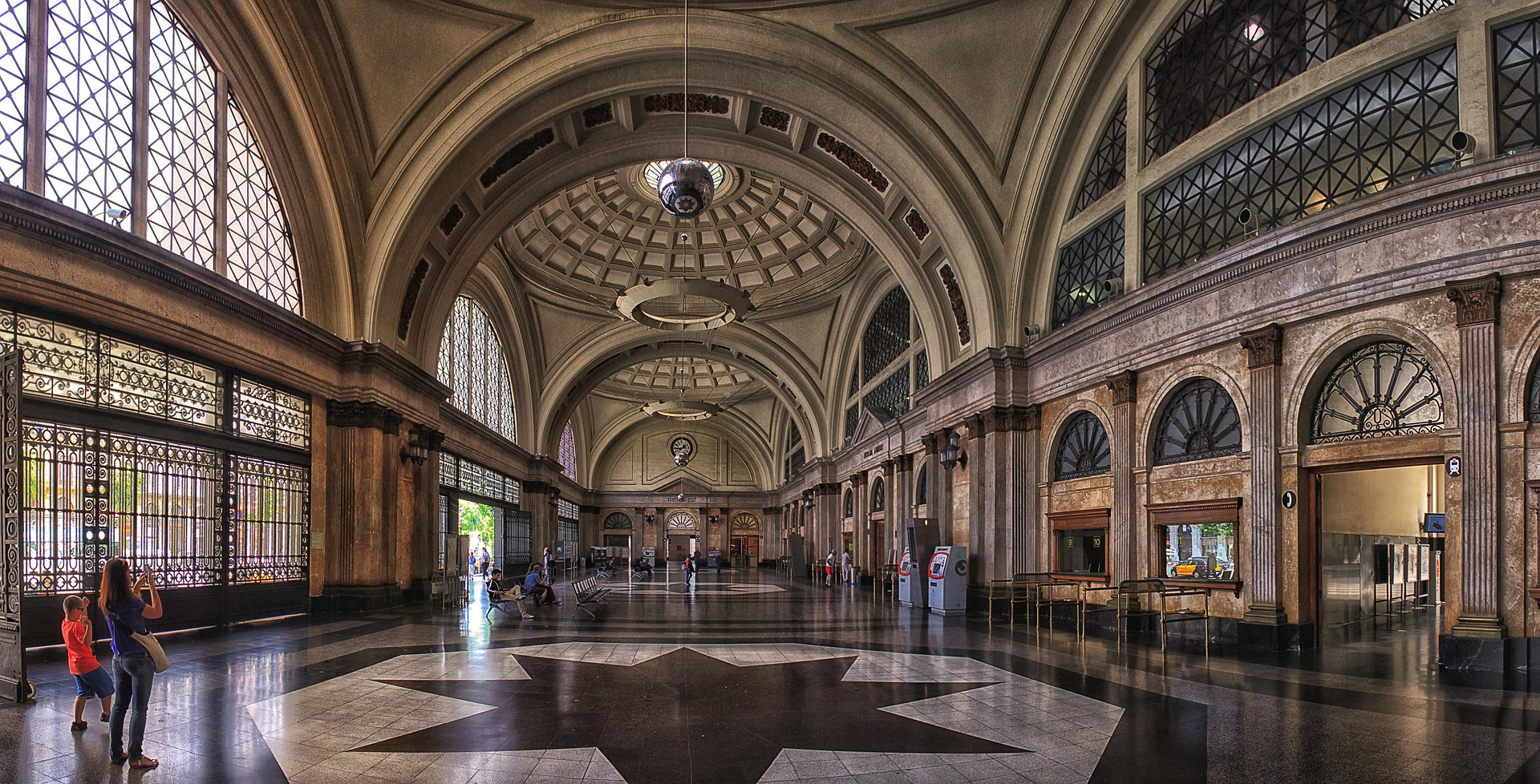
I can usually tell how long I am going to be in a station within about ten seconds of walking into it. Not by the departure boards. Not by the shops. By the floor, the walls, and the bits of railway that nobody puts in photographs.
This is not a skill I am proud of. It is just what happens when you have spent most of your working life in places like this. You stop seeing stations as places you pass through and start seeing them as things that are either coping or quietly falling apart.
Most people look up when they enter a station. I look down.
Floors tell you everything. Shiny floors mean a station that is managed for appearance. Scuffed, repaired, slightly mismatched tiles mean a station that is managed for use. In Spain, you get a lot of the second kind, which I approve of. A floor that has been patched three times in three different colours is a floor that has lived.
Then I look at the edges. The corners where walls meet floors. The places where nobody decorates unless they have to. If those are clean, the place is probably being run properly. If they are full of dust, old chewing gum, and the ghosts of old cables, then the management is mostly working from PowerPoint.
Signage is next. Not the big signs. The little ones. The ones that have been added later, when someone realised something did not work. Handwritten notices laminated six years ago. Stickers half peeled off. Temporary signs that have become permanent. These tell you far more about a railway than any brand guidelines ever will.
I always look at the clocks.
A station that cannot keep its clocks in agreement is a station that has bigger problems. It sounds like a small thing. It never is. Railways are built on time in the same way bridges are built on concrete.
Then come the buffers and the ends of platforms. The places where trains stop and start. These are like the cut ends of wood. You can see how something is really made by looking there. Are things straight. Are they maintained. Are there fresh marks from recent work or just layers of old paint and older rust.
In Spain, you often see quite good basic maintenance and quite odd cosmetic decisions. A perfectly sound piece of infrastructure painted in a colour that nobody asked for. A beautiful old column hidden behind a plastic panel. A very expensive new sign pointing at something that no longer exists.
I also watch how staff move.
Not in a creepy way. In a professional way. People who know their station move differently. They take shortcuts that make sense. They look up at the boards without really looking. They know where the awkward bits are and step around them without thinking.
A station where staff look lost is never a good sign.
Then there is the sound.
Every station has a background noise that tells you what sort of place it is. Some have a steady hum. Some have echoes. Some have the constant beep and bleep of machines arguing with each other. Barcelona Sants has the sound of a very large building trying to pretend it is calm.
Small stations often sound healthier. You can hear individual things happening.
Finally, I look at the things that have been abandoned but not removed. Old brackets. Old cables. Old signs painted over but still visible if you know where to look. These are the geological layers of a railway. They tell you what the place used to be before it became what it is now.
Sue, sensibly, looks for a café.
I will eventually follow her, but only after I have checked the platform edges, the condition of the canopy supports, and whether the ticket machines look like they have been recently threatened by a frustrated human.
None of this makes journeys faster. None of it makes the trains run better.
But it does mean that when I sit down on a train, I already know what sort of railway I am dealing with.
And after a lifetime in the job, that is a habit that does not go away.
No responses yet