I did not move to Spain intending to become a railway comparative analyst. I moved here because Sue liked the light, the oranges tasted like oranges again, and I was tired of being cold in my bones nine months of the year. But once you have spent most of your working life in railways, you do not stop noticing railways. You just notice them in different languages.
The first thing you notice in Spain is not the trains. It is the stations. They are either enormous and echoing like aircraft hangars, or oddly small and polite, with a single café and a man in a high-vis jacket who seems to know the timetable by heart. Barcelona Sants still feels like a place where something important is about to happen, even if what is actually happening is mostly people buying sandwiches and looking worried.
Back in the UK, stations feel like negotiations. Everything is a compromise between Victorian brickwork, modern signage, and the fact that someone, somewhere, has decided your platform needs changing three minutes before departure.
Spain feels different. Not better, not worse. Different in a way that takes a while to put your finger on.
Let’s get the obvious bit out of the way. High speed.
The AVE is Spain’s pride and joy, and in pure engineering terms it deserves to be. Long straight lines, purpose-built track, trains that are designed to stay on schedule rather than apologise for not doing so. If you have ever sat in a UK train outside Milton Keynes for forty minutes “awaiting a signal”, the first time you do Barcelona to Zaragoza at full tilt feels like witchcraft.
But here is the thing people do not tell you. The AVE is a separate world. It is not the railway in the old sense. It is an airline that happens to run on rails. You turn up, you go through security, you sit in a big seat, you arrive somewhere else. It is impressive, but it does not feel like a network. It feels like a corridor.
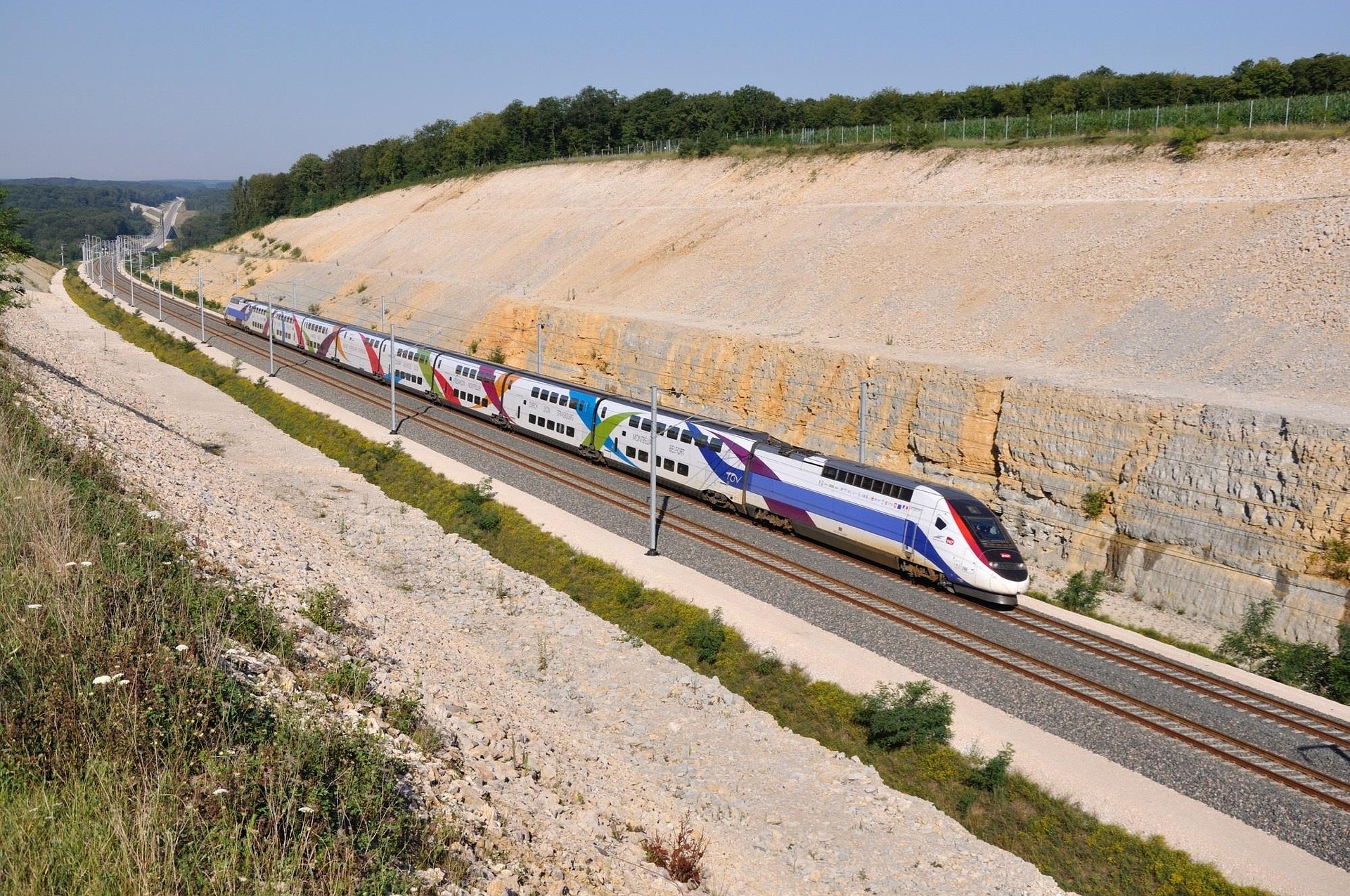
France’s TGV is similar, but it feels more stitched into the rest of the system. Germany’s ICE even more so. In Germany you get the sense that fast trains, slow trains, freight and regional services all belong to the same organism, even if that organism has a habit of developing mysterious delays.
Spain, by contrast, feels like it has built two railways that politely tolerate each other. The shiny one and the everyday one.
The everyday one is where things get interesting.
Take commuter and regional services. In Catalonia, Rodalies does the job in a way that will feel familiar to anyone who has used British commuter rail. Trains turn up. Mostly. Sometimes they do not. Sometimes they turn up in pairs. People complain, but not with the same ritualised fury you get in the UK, where complaining about trains is practically a branch of public service.
What Spain does better, in my experience, is simplicity. Fewer brands pretending not to be the same company. Fewer ticketing systems that feel like they were designed by a committee of enemies. You buy a ticket. You get on a train. This should not feel like a luxury, but after decades in Britain it does.
Germany, on the other hand, is a marvel of ambition and a mystery of execution. The S-Bahn and regional networks are extraordinary in scale and integration. You can go almost anywhere. You just might not get there when the screen said you would. When Germans complain about their trains, it is not because the system is small. It is because it is huge and therefore heartbreakingly complicated.
And then there is freight, which is the part nobody who writes lifestyle articles ever talks about.
Spain moves far less by rail freight than it should. You can see it in the infrastructure. You can see it in the long, beautiful high speed lines that are almost exclusively for passengers. In Germany and parts of France, freight is still the quiet backbone of the network. Long, heavy, unglamorous trains doing the work that keeps everything else honest.
In the UK, freight survives largely by stubbornness and good pathing.
In Spain, it often feels like an afterthought, despite all the talk of corridors and European integration. That may change. Slowly. Everything in rail changes slowly, except timetables, which change far too often.
Then there is the passenger experience, which is where railways reveal their true character.
In Spain, stations are calmer. Even when they are busy, they are not angry. In the UK, a busy station feels like a low-level emergency that everyone has agreed not to name. In France, it feels like theatre. In Germany, it feels like an argument between logic and reality.
Ticketing in Spain is still more fragmented than it ought to be, but at least it is fragmented in a way a normal person can sometimes understand. In Britain, ticketing is a sort of national puzzle game with penalties.
One thing Spain does extremely well is not pretending that every train journey is a spiritual experience. You sit down. You go. You get off. Nobody tells you about the romance of rail. They just run the train.
From a professional point of view, the most interesting difference is philosophy.
The UK tries to sweat every inch of Victorian infrastructure until it cries. Germany builds complexity and then tries to manage it with software. France builds statements. Spain builds projects.
The AVE is a project. A magnificent one. But the quieter lines, the regional services, the odd little stations with one man and a café, those are the real railway. They are the bits that tell you how a country actually works.
I find myself liking Spain’s railway not because it is perfect, but because it is honest about what it is good at and what it has not quite finished yet.
And perhaps that is the real difference.
In Britain, we talk about trains as a problem. In Germany, they talk about them as a system. In France, as a matter of national pride. In Spain, they talk about them as something that is still being built.
Which, after a lifetime in railways, feels strangely refreshing.
Tomorrow I will probably take a small regional train somewhere that does not appear in any brochure, buy a coffee from a machine that does not quite work, and watch a freight train roll past that nobody seems to notice.
That, to me, is still the real railway.
No responses yet