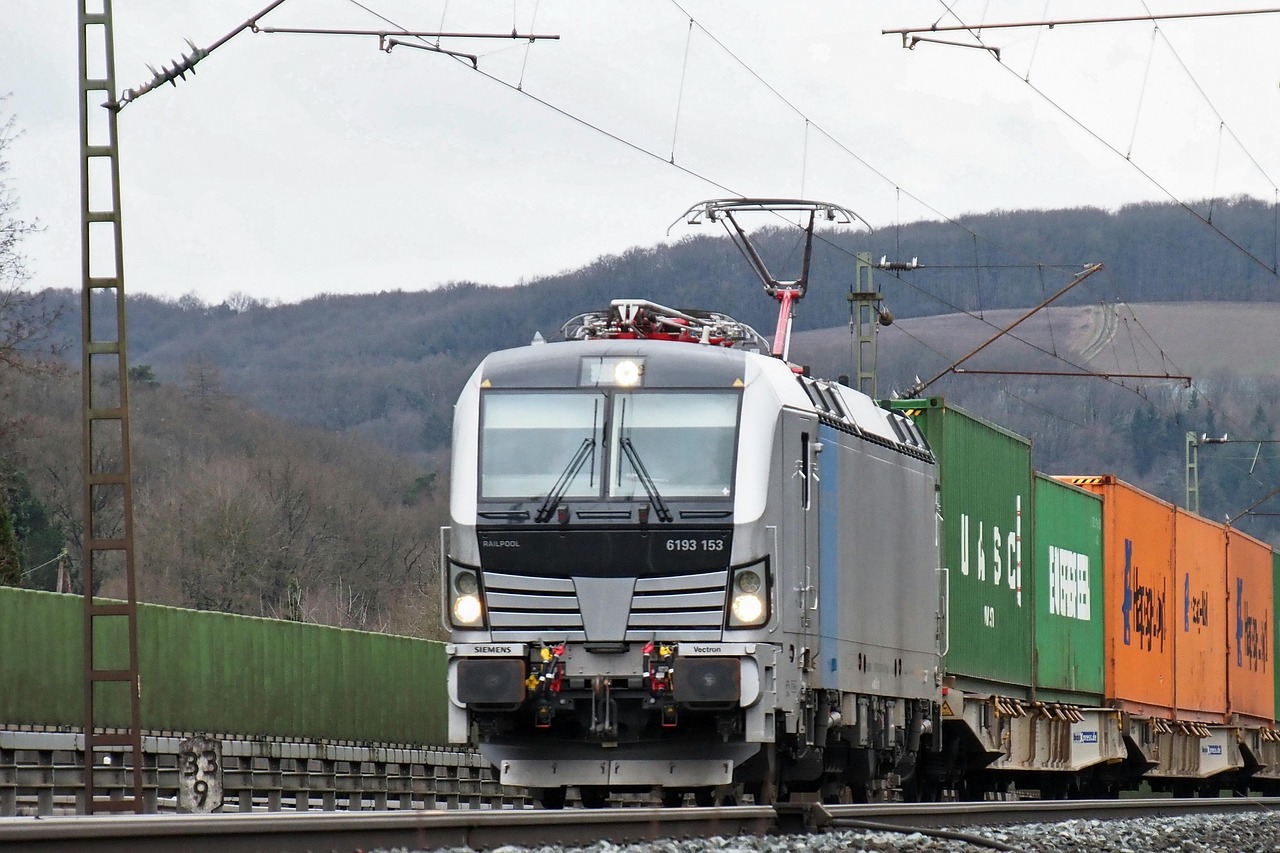
I hadn’t been near a freight yard in years. The passenger stations get all the glamour these days. Polished floors, ticket machines that speak five languages, trains that whisper instead of growl. But freight is where the railway still sounds like itself.
Just before midnight I walked down the service road behind Barcelona’s Sant Andreu yard. Sodium lights, air smelling of oil and dust. The same low hum I remember from Crewe when I was an apprentice, except the language of the warning signs has changed.
The first thing you notice is how quiet it actually is. A long stretch of stillness, then a single clank that echoes like a hammer in an empty hall. Someone’s coupling a set of container flats. A 333.3 class locomotive idles at the far end, diesel rumble steady, paint peeling where the sun hits it all day.
RENFE Mercancías runs most of the freight in Spain. They haul cars, containers, chemicals, anything that needs moving when everyone else is asleep. Standard gauge now links some lines to France, but much of the old Iberian network still uses broad gauge, which means wagons swapped or bogies changed. Complicated, but it works.
I talked to a driver waiting for clearance to Zaragoza. Name was Rafael. Been doing this run for seventeen years. “Pasajeros tienen horario,” he said, passengers have timetables, “nosotros tenemos paciencia.” He grinned and lit a cigarette.
He let me climb up and have a quick look at the cab. Simple layout, a mix of digital and analogue, the cab fan blowing warm air that smelled faintly of brake fluid. The desk light threw a small circle across the gauges. I could have stayed there all night.
At 00:43 the signal turned green and the wagons began to move, slow at first, wheels clattering, the whole set stretching out like it was waking up. Two hundred metres of freight leaving Barcelona for the inland plain. No fuss, no audience.
Watching it disappear, I thought about how different the rhythm is from passenger work. Freight is slow conversation, not small talk. You listen for the sound that doesn’t belong — a hiss, a knock, a wheel that’s out of true. It’s about weight, trust, and habit.
I took the last train home at 01:12, a quiet Cercanías full of cleaners and night-shift workers. Everyone half-asleep, the city sliding past in sodium orange. Somewhere out there, Rafael’s train would be crossing the Llobregat bridge, headlights bouncing off the river.
People talk about progress, but what keeps the railway alive isn’t speed. It’s motion in the dark, somebody still awake to keep it going.
Rail Fact
Operator: RENFE Mercancías
Typical locomotive: Class 333.3 diesel-electric, 3 300 hp
Average freight train length: 400–500 m, up to 1 600 t
Main night corridors: Barcelona–Zaragoza, Madrid–Valencia, Bilbao–Valladolid
Noise signature: 80–90 dB at coupling, dropping to 60 dB under steady haul
Observation: Freight yards accessible only with prior authorisation; best public viewpoints are from road bridges at Sant Andreu, Castellbisbal, and Tarragona Port.
No responses yet