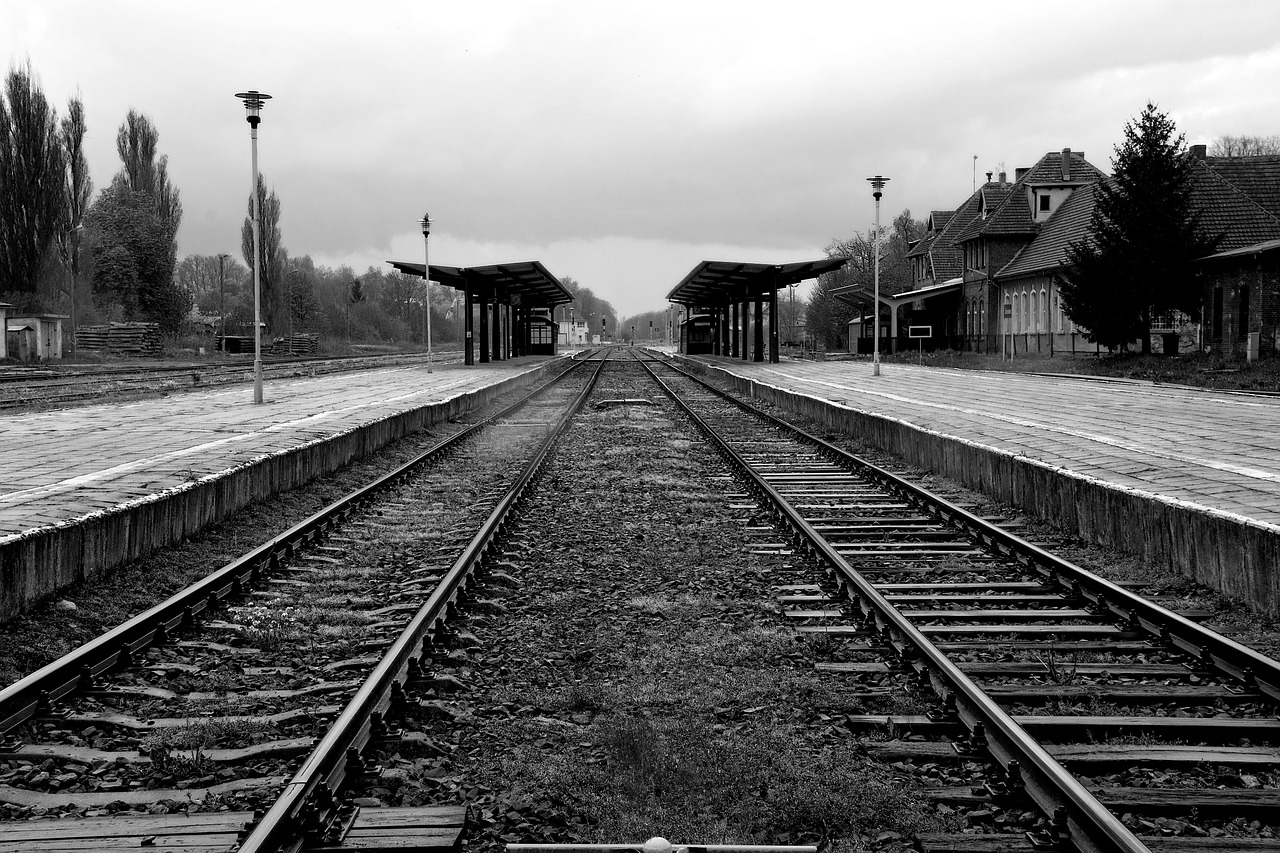
Where the Tracks Trail Off into Silence
They don’t really vanish, you know. These old Spanish railway lines. They don’t scream or collapse or announce their demise. They just… fade. A quiet surrender to weeds, rust, and time. For every sleek AVE thundering across the country, there’s an old siding somewhere with ivy strangling the signal posts and rails that haven’t sung under a wheel for fifty years.
I call them my ghosts. Sue calls them “your extremely expensive hobby.” And yet she still comes along, like always.
How Spain Lost So Many Lines
The old railway boom charged through Spain like an overexcited child in the late 1800s. Build a line here. Another there. Connect remote farms, tiny mining outposts, entire regions hanging on economic hope. And then the lorries came. The cars. The motorways. Slowly, passengers dwindled. Freight shifted to trucks. Villages emptied. Budgets tightened.
By the time Renfe cleaned house in the late 20th century, it was brutal. Entire regions were slashed off the map. Castilla y León, Extremadura, Andalusia—dozens of small, winding lines shut forever.
A Few of My Favourite Ghosts
Ruta de la Plata
Once a grand artery running from Gijón in the north to Seville down south, Ruta de la Plata had ambitions. Now? It’s mostly a Vía Verde, popular with cyclists and walkers who probably have no idea they’re treading on what used to be serious rolling steel. The old stations? They just stand there. Like forgotten gatekeepers.
Linares–Almería Mining Railway
This was pure industrial muscle. Hauling iron ore out of the Sierra Morena. Now? Pieces of it have vanished under roads and shopping centres, but here and there you’ll still find a cracked viaduct or a tunnel mouth staring out into nowhere.
Santander–Mediterráneo Railway
A grand plan that fizzled spectacularly. Meant to stitch the northern coast to the Mediterranean. It barely made it halfway before politics, money, and bad luck left it unfinished. Today: ghost stations, half-built bridges, and dead ambition litter the landscape.
The Greenway Rebirth
But not all of it has died. Spain’s done something clever. These old lines are being reborn as Vías Verdes (Greenways). Walkers and cyclists cruise along these old beds now — Spain has over 3,000 kilometres converted — never worrying about gradients, because, well, trains hate steep hills. The gentle slopes remain perfect for leisurely pedalling.
And tourists? They’re catching on. Some short sections run occasional heritage trips; others are being eyed for possible reopening. Rural tourism, they call it. I just call it hope.
Sue’s Patience (and Mild Despair)
I’ve crawled through more bramble patches than I care to count, chasing down rusted signals or peeking inside collapsed goods sheds. Sue, always the practical one, sits nearby with her thermos, watching me like she’s married to a slightly mad archaeologist.
“These aren’t train stations, Bill,” she says. “They’re your weird version of cemeteries.”
She’s not wrong.
The Next Chapter
Every abandoned track tells a story. Not loud. Not obvious. But if you listen closely, they’re still there beneath the moss. And as much as I love hunting ghosts, next time we’re visiting something that’s very much alive: one of Spain’s most stunning working stations, where the past still breathes.
No responses yet